
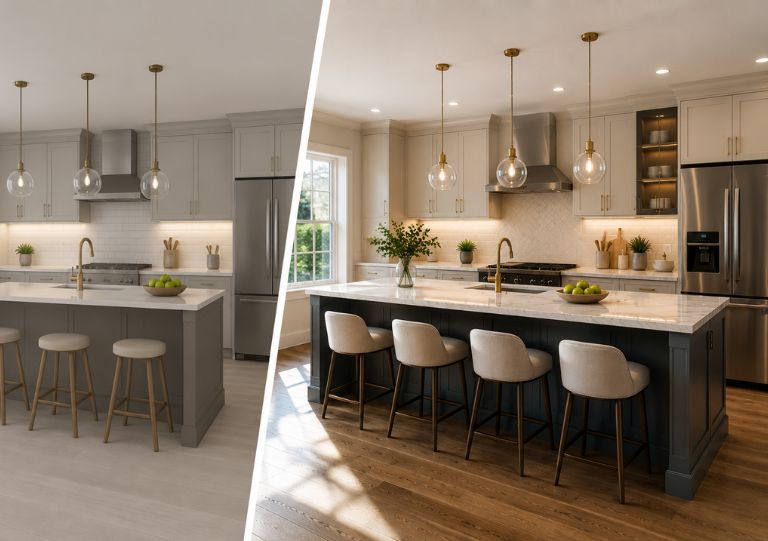
The kitchen design industry has changed significantly over the last few years. Homeowners and cabinet manufacturers no longer rely only on physical product photography to showcase kitchen designs. Instead of just doing it the old way, 3D Product Rendering for the Kitchen thing has turned into a smarter, flexible approach to show modern kitchen ideas before they’re even built, or like before anyone commits to construction.
Sure, traditional product photography still matters. It’s kind of the baseline in a lot of places, but it usually needs finished products, a real professional photoshoot, and extra spending whenever a design gets tweaked. With 3D rendering, though, you get very lifelike digital views that let clients grasp the full picture of the details before manufacturing starts.
So if you’re planning a kitchen remodeling project, or promoting custom cabinets, it helps a lot to understand how these two visualization methods differ, because then you can decide more confidently.
What Is a 3D Product Rendering Kitchen?
A 3D Product Rendering Kitchen is a photorealistic digital representation of a kitchen created using advanced 3D design software.
These renderings showcase:
- Kitchen cabinets
- Countertops
- Islands
- Appliances
- Lighting
- Materials
- Colors
- Decorative elements
Instead of just imagining the end result, clients can get a realistic preview, before anything actually goes into production.
Modern rendering technology also works alongside digital kitchen planning software to improve design accuracy and communication. You can read more in our blog How 2020 Kitchen Design Software Improves Accuracy and Speed in Projects.
3D Product Rendering Kitchen vs Traditional Product Photography
1. Better Design Visualization
Traditional photography only really shows kitchens that already exist.
Meanwhile, the 3D Product Rendering Kitchen kind of lets designers make pretty lifelike visuals early on, like right before manufacturing starts.
Clients can then test out various layouts, cabinet textures, countertop selections, and even lighting moods, without building a bunch of extra trial kitchens.
It makes the whole design process feel smoother, and yeah, a bit more interactive as well.
2. Greater Flexibility
One of the big wins with 3D Product Rendering Kitchen is flexibility.
Designers can instantly change:
- Cabinet colors
- Countertop materials
- Flooring
- Hardware
- Lighting
- Appliances
Traditional photography requires a completely new photoshoot for every design variation.
3. Cost and Time Savings
Professional product photography involves:
- Studio setup
- Professional photographers
- Product transportation
- Styling
- Editing
- Multiple reshoots
With 3D Product Rendering Kitchen, new images can be created digitally in a fraction of the time and cost.
That allows manufacturers to release products quicker, and also cut back on marketing expenses.
4. Better Customer Decision-Making
Honestly a lot of homeowners struggle to picture kitchen designs when the only thing they see are technical sketches or drawings.
A realistic rendering helps clients understand:
- Space planning
- Cabinet layout
- Material combinations
- Lighting effects
- Overall kitchen appearance
This improves confidence and reduces design revisions.
If you want to understand how realistic visualization helps clients, read our article How Photo Realistic Kitchen Renderings Help Clients Visualize Better.
5. Ideal for Custom Kitchen Projects
Every custom kitchen is different. Clients commonly ask for several design variations before they pick one final direction.
Using 3D Product Rendering Kitchen, designers can show different layout options plus material pairings fast, without any extra manufacturing expense.
Similarly, 2020 Design Cabinets help improve kitchen planning through accurate digital layouts and visualization. Learn more in our guide How 2020 Design Cabinets Improve Kitchen Planning and Visualization.
Does Traditional Product Photography Still Matter?
Yes.
Traditional photography remains valuable for:
- Completed project portfolios
- Real installation galleries
- Customer testimonials
- Marketing brochures
- Website case studies
However, it cannot match the flexibility and customization offered by modern rendering technology.
Many successful kitchen companies now combine both rendering and photography to create stronger marketing campaigns.
Why Professional Rendering Services Matter
Advanced software can create beautiful visuals, but professional designers ensure that those visuals are practical and ready for production.
They understand:
- Kitchen workflow
- Space planning
- Material coordination
- Cabinet dimensions
- Storage optimization
- Manufacturing requirements
That combination of design expertise and rendering technology creates kitchens that look impressive while remaining functional.
Professional planning also works alongside technical drawings that improve manufacturing accuracy. You can explore this further in How Cabinet Shop Drawings Help Reduce Errors in Manufacturing.
Final Thoughts
As kitchen remodeling keeps changing and getting more advanced, 3D Product Rendering Kitchen is quickly turning into the go-to option for visualization, plus product marketing. It brings realistic previews, more wiggle room, quicker changes during updates, and stronger customer engagement than old style product photography.
Even though real photography still matters for finished projects, 3D rendering feels like a smarter approach for today’s kitchen planning and custom cabinet visualization.
When businesses blend convincing rendering with solid design know-how, they can create a better customer experience, cut down on revisions, and help get approvals faster.