
Key Takeaways (TL;DR)
- Digital marketing for cabinet manufacturers helps increase online visibility, reach potential buyers, and generate B2B leads.
- SEO helps cabinet manufacturers appear in relevant search results when buyers look for cabinet products, suppliers, and manufacturing partners.
- A solid website builds trust. It should list products, show project photos, and make it easy to contact the team.
- Posting useful content and staying active on LinkedIn lets manufacturers share skills, show what they can produce, and highlight past jobs.
- Email outreach and paid ads can put the business in front of the right prospects. They also support follow ups after an initial interest.
- Consistent digital marketing helps cabinet manufacturers expand into new markets and build long-term business relationships.
Digital marketing for cabinet manufacturers is an important part of reaching new customers, building credibility, and generating business inquiries. Referrals and established dealer relationships remain valuable, but manufacturers also need an online presence that helps potential buyers evaluate their products and capabilities before making contact.
Cabinet Dealers, builders, distributors, and teams on commercial projects often compare suppliers based on product range, customization options, manufacturing capabilities, and responsiveness. If your website does not communicate these details clearly, potential customers may struggle to determine whether your business is the right fit.
A practical digital marketing strategy connects your website, search visibility, content, and outreach activities to your sales process.
Why Is Digital Marketing Important for Cabinet Manufacturers?
Cabinet manufacturing is a competitive business, and potential customers need clear reasons to choose one supplier over another. Digital marketing gives manufacturers more opportunities to communicate their capabilities, demonstrate product quality, and stay visible during the supplier research process.
It can support business growth in several ways:
- Help reach new customers by improving your online visibility.
- Showcase your products, finishes, and customization options to potential buyers.
- Build trust by sharing project photos, customer reviews, and product details.
- Generate business inquiries through your website and online channels.
- Expand into new markets by reaching buyers beyond your existing network.
Digital marketing is not a stand-in for good service, real relationships, or strong product work. It simply makes it easier for people to notice those strengths and see how to start a project with you.
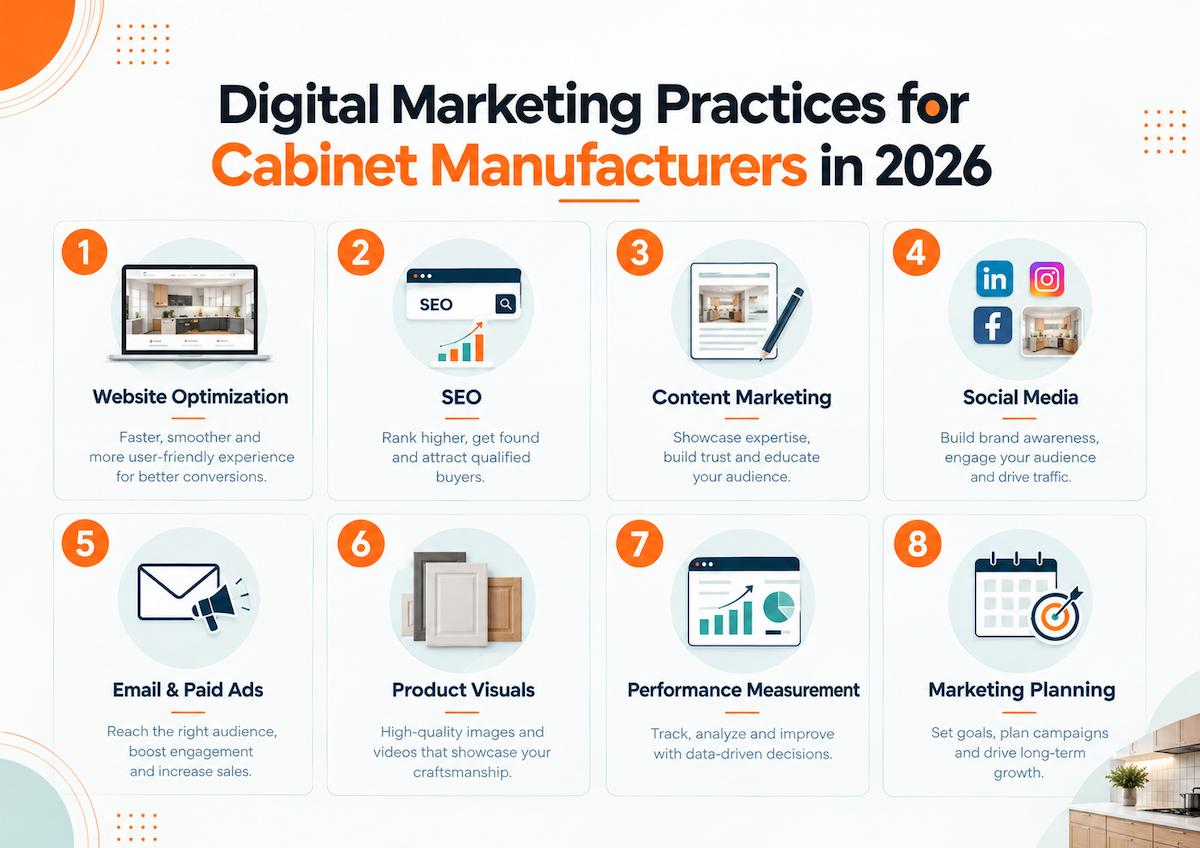
Best Digital Marketing Practices for Cabinet Manufacturers in 2026
Get an advantage over competitors and grow your online business by using these essential digital marketing tips for cabinet manufacturers in 2026.
Build a Website That Generates B2B Leads
Your website should help prospective buyers evaluate your products, manufacturing capabilities, and suitability for their projects. Clearly present cabinet types, materials, finishes, customization options, production capabilities, and the customer segments you serve.
Create dedicated product pages with useful specifications and genuine project photographs. Include certifications and testimonials where available, along with clear options to request pricing, discuss requirements, or contact your sales team. Mobile usability, page speed, and straightforward navigation also matter.
A website should support the sales process rather than simply describe the company. Every important page should answer a buyer’s questions and provide a logical next step.
Improve Search Visibility With SEO
SEO can help cabinet manufacturers show up when people look for cabinets, suppliers, or manufacturing help. First, figure out the words your buyers type into search. Then make web pages that match those searches.
Focus on these activities:
- Keyword research: Target relevant commercial phrases related to cabinet manufacturing, custom cabinetry, wholesale cabinets, and specific product categories.
- On-page SEO: Optimize page titles, headings, meta descriptions, URLs, and image alt text.
- Technical SEO: Maintain a crawlable website, logical navigation, mobile usability, and appropriate indexing.
- Internal linking: Connect related product pages, service pages, and articles using descriptive anchor text.
- Industry authority: Earn relevant links through useful resources, legitimate business partnerships, and industry contributions.
Avoid targeting only broad , highly competitive terms. If you use more specific searches, you can reach people who are actually looking for what you offer.
Review Google Search Console to identify queries generating impressions and clicks, then improve pages that attract relevant visitors but do not generate enough inquiries. SEO should help the right customers find your business, not simply increase website traffic.
The goal of SEO is to help the right customers find you. It is not just about getting more visits.
Use Content Marketing to Demonstrate Expertise
Content marketing for cabinet manufacturers should answer questions that influence supplier selection, product evaluation, and project planning. Rather than publishing generic articles, focus on the issues your customers encounter when purchasing cabinets or coordinating manufacturing work.
Useful content includes:
- Product guides covering cabinet materials, finishes, construction methods, and customization.
- Case studies showing completed projects, product specifications, and manufacturing capabilities.
- Articles explaining ordering requirements, lead times, quality control, and production planning.
- FAQs addressing minimum order quantities, customization, and delivery expectations.
- Videos demonstrating manufacturing processes, product details, and quality checks.
For instance, a manufacturer serving commercial projects could publish a guide to planning cabinet orders for multi-unit developments. A supplier working with kitchen dealers could explain how accurate layouts and documentation support project coordination.
Cabinet2020’s article on reducing manufacturing errors provides a relevant example of how technical information can address practical production concerns.
Use Social Media Platforms for Visual Content
Social media can help cabinet manufacturers present their products and develop relationships with potential business customers. Choose platforms based on your target audience and the type of information you need to communicate.
- LinkedIn: Connect with cabinet dealers, builders, distributors, purchasing managers, and commercial project decision-makers.
- Instagram: Showcase cabinet finishes, product details, completed installations, and project photographs.
- YouTube: Publish factory tours, product demonstrations, and manufacturing process videos.
- Facebook: Share product updates, company news, project photographs, and relevant customer feedback.
LinkedIn is a strong pick for B2B marketing. The Content marketing institute ran B2B research. In that study, 85% of the B2B marketers considered LinkedIn the social platform delivering the best value of their organization.
Post your content on a steady schedule and participate in relevant industry discussions. Track whether your activity produces meaningful conversations and qualified inquiries instead of judging performance solely by likes or follower counts.
Get Leads With Email Outreach and Paid Ads
Email outreach and paid ads can support SEO. They help cabinet makers reach the right buyers faster.
Email work works best when you group contacts first. Sort them by industry, site, product needs, and buying role. Send content that fits each group. Include key product details, your plant strengths, and a few project samples. If you do direct B2B outreach, write messages that match the lead. Also follow the email rules and privacy steps that apply. When you follow up, keep the tone polite and business like.
Paid ads can also bring in buyers who are already looking. Focus on these options:
- Google Search Ads for high intent searches
- LinkedIn ads aimed at the right job titles and sectors
- Retargeting when it is allowed and makes sense
- Landing pages that push users to request a quote
Track what matters. Watch qualified inquiries, conversion rates, cost per qualified lead, and the sales that follow. Ads that pull a lot of clicks but attract few real buyers may be weaker than ads that bring less traffic but more qualified requests.
Use Product Visuals and Technical Content to Support Sales
Product visuals help potential buyers evaluate cabinet configurations, finishes, and customization options before discussing a project. Combine accurate product photography with drawings and 3D visuals when they help communicate specifications or proposed layouts.
When it makes sense, add clean drawings and simple 3D views too. This can make measurements and proposed floor layouts easier to understand.
For example, photorealistic 3D renderings can communicate proposed kitchen configurations, while accurate technical documentation helps teams coordinate design requirements with manufacturing processes.
Manufacturers, dealers, and builders should also consider how layouts, shop drawings, and estimation support fit into their workflows. When project volumes increase or internal teams face a drafting backlog, external design and documentation support can provide additional capacity without immediately expanding permanent staffing.
Measure Results and Refine Your Strategy
Digital marketing requires regular measurement. Establish a baseline, track meaningful outcomes, and adjust your approach based on the results.
Monitor these metrics:
- Track organic search impressions, clicks, relevant search queries, and qualified website visits.
- Monitor quote requests, contact form submissions, and qualified business inquiries.
- Measure relevant email replies, meetings booked, and sales opportunities.
- Evaluate paid advertising through cost per qualified lead and conversion rates.
- Track new customers, sales opportunities, and attributable revenue where measurement is reliable.
Review performance monthly and identify which channels attract the most relevant prospects. A campaign that generates fewer inquiries may still deliver better business results if those inquiries come from qualified dealers, distributors, or commercial buyers.
Create a Practical Digital Marketing Plan for 2026
Cabinet manufacturers do not need to implement every marketing channel at once. Start with the activities most likely to address your current business needs.
- Audit your website, product pages, and quote-request process.
- Prioritize relevant commercial keywords and improve core pages.
- Publish useful articles, product guides, and genuine project examples.
- Develop a consistent LinkedIn presence and targeted B2B outreach process.
- Test paid campaigns when conversion tracking and lead follow-up are ready.
- Review results monthly and invest in channels that produce qualified opportunities.
A focused plan makes it easier to manage resources, measure progress, and improve marketing activity over time.
Final Thoughts
Digital marketing helps cabinet makers most when a few parts work together. You want your site updates, search presence, helpful posts, outreach to the right people, and reporting to all match the same goals. What you do next will depend on what you sell, who buys, how long sales take, and what time and money you can spare.
Start with a website that shows what you can do in a clear way. Then work on getting found for the searches that matter. Use content and direct outreach to talk with people who might buy. Keep an eye on the results. Adjust your plan based on whether the leads you get are actually worth your time.
For manufacturers and dealers that also need additional kitchen design, drafting, rendering, or estimation capacity, explore Cabinet2020 services for production-focused support across the USA and Canada.
FAQs
How do cabinet manufacturers market their businesses online?
Cabinet manufacturers can use a professional website, SEO, educational content, LinkedIn, targeted email outreach, and paid advertising to reach prospective dealers, builders, distributors, and other business buyers.
Which digital marketing channels work best for cabinet manufacturers?
The best channels depend on the target audience, product category, sales cycle, and budget. SEO supports long-term discovery, while targeted outreach and paid search can help reach relevant buyers more directly.
How can cabinet manufacturers generate more B2B leads?
Improve product and capability pages, target relevant commercial searches, showcase genuine projects, and provide straightforward quote-request options. Follow up promptly and track which sources produce qualified inquiries.
How long does digital marketing take to produce results?
Paid advertising can generate traffic soon after launch, while SEO and content marketing generally require sustained effort. Results depend on competition, website quality, budget, content relevance, and the effectiveness of the sales process.